
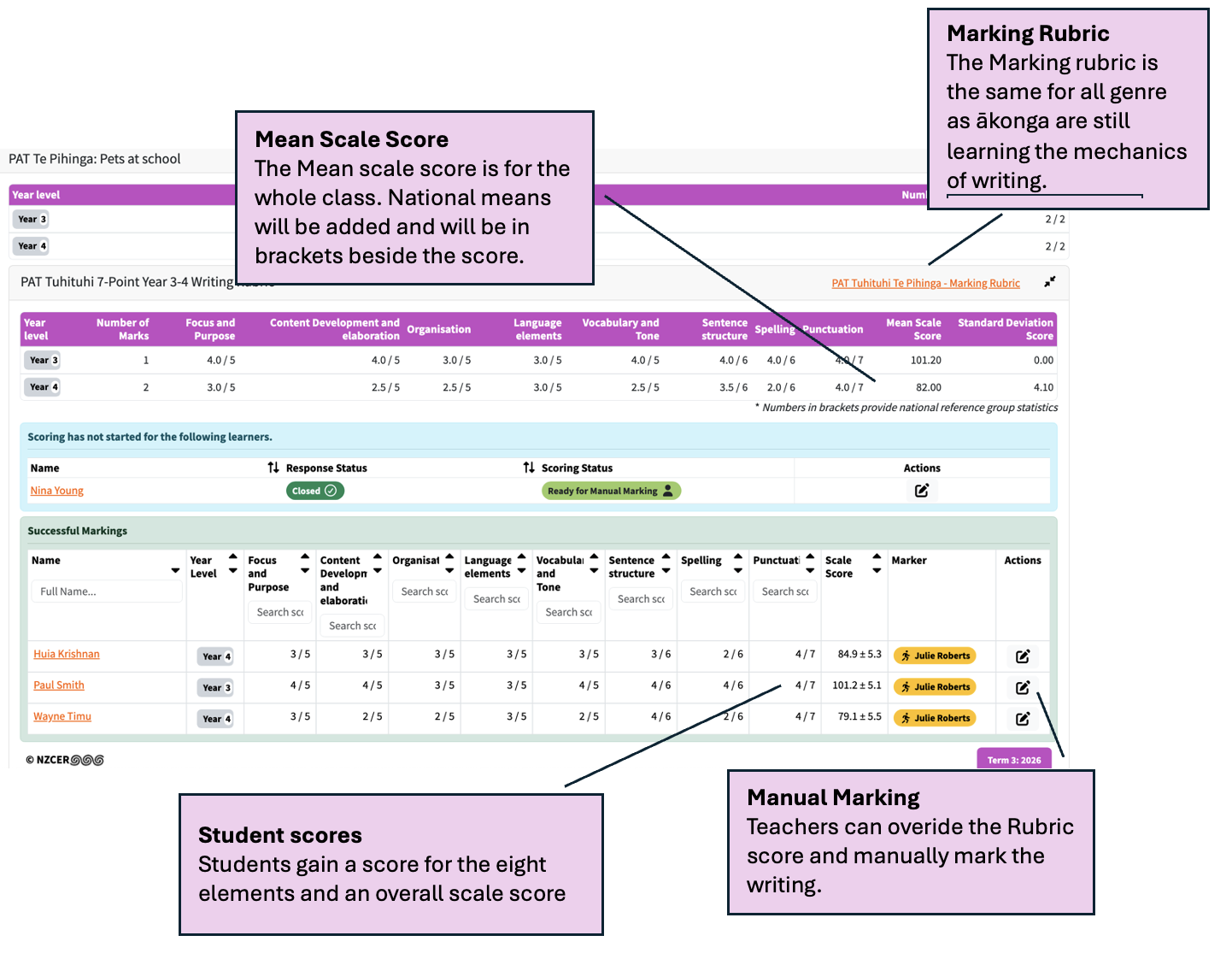
The Rubric List report displays all completed student responses within an assessment along with a description of their status. The report includes summary statistics on writing scores across the PAT Tuhituhi Te Pihinga rubric elements and an overall mean score. The Successful Markings table contains responses that have been successfully scored. In the Rubric List Report screen is where you can also edit a mark by clicking the Manage Marking button (pencil looking icon) under Actions.
Features
- Scale Score: The Scale score column shows the overall achievement for the ākonga across all rubric elements.
- Mean Scale Score: This the avearge scale score across the class or cohort alongside the national reference mean scale score for the appropriate year level (in brackets).
- Element Score: For each element score, ākonga achievement is reported against the progressions outlined in the rubric. NB: These are different for different elements
- Marking the language elements - for guidance on marking the language elements for each genre, please see the attached Guide
Using this Report
- Scale score: Use the toggle in the scale score column to order the scale scores from lowest to highest. Use the decades of the scale to group students who are more than likely at the same level of achievement. Scan the element scores for this cohort to find strengths or needs across the elements for targetted next steps teaching.
- Elements:Using the printed rubric alongside, order each element to sort ākonga rubric scores. Use the rubric progress descriptors to review the skills and knowledge each score describes and identify what ākonga next steps will be. Focus on the elements that have lowest scores across the cohort to build strength and/or extension in ākonga skills.
- Use the progress descriptors as guides/evidence to examine the NZ curriculum and determine where the students sit in either progressing towards their expected year level, sitting at, or requiring extension in their year level in the different knowledge or practices
- Target planning to elements that require acceleration or shift when compared to scores in other elements