
The Item Report provides the test's content breakdown at the level of the curriculum the test is recommended for. The Item report indicates what percentage of the group of students answered each question (item) on a test successfully. It also compares the success of the group on the questions with the success of students from the national reference group at a given year level.
The report provides links to each question/item plus a breakdown of how each student answered each question providing in-depth diagnostic knowledge of individual students' knowledge and skill in specific areas of the subject. Good curriculum knowledge will allow teachers to quickly make links between the particular concept being tested by individual questions and the students' responses, and the knowledge or practice in the NZ curriculum the evidence relates to.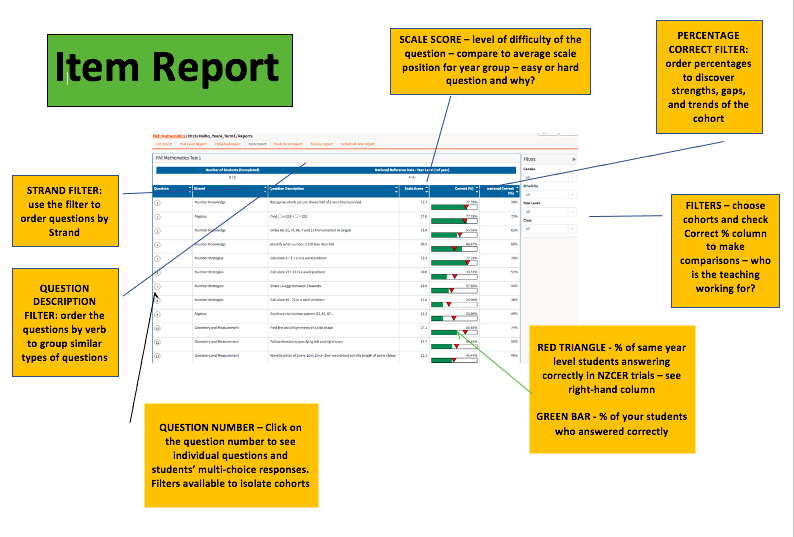 When reading the report it is important to identify which year level the group of students is being compared with. In Term 4 students will automatically be compared to the following reference year's Term 1 results. It is important to remember that national performance on a question is only a reference point. A school might expect their students to consistently perform above the national proportions.
Using the Item Report
The amount of assessment information in the Item report can seem overwhelming. Teachers are not expected to look at every question and every student. The Item Report can be used to 'drill down' into the subject knowledge and skill to:
- Group Strand questions and compare results. In the Filters there is now a Use curriculum strands button with the ability to sort the items under the current curriculum strands.
- CLICK on individual question numbers to see student responses and gain insights into student understanding. The scale value of the question plus the careful design of the multi-choice answers help teachers to position ākonga understanding against the concept under review.
- Use the Filters to uncover trends and patterns, strengths and weaknesses that exist in the test group - gender or ethnic difference? differences between classes?
- Kaiako cannot respond to all of the information. Use the scale to identify specific cohorts who require specific teaching or specific concepts that are weak to target knowledge and skills.
- Follow hunches, 'informal conclusions' to identify actual needs